
Copywriting
When people start talking about building a website for their business, the first thing they usually think about is how it’s going to look. The problem is, fancy web design with sluggish text gets customers moving as much as a fancy looking car with a sluggish engine. That is…not…very…fast.
Think about it. Would you marry someone just because they were beautiful? Of course not. Visual design is an important element. It provides a sense of professionalism and credibility for your business. But that’s not what creates new customers and sales. It’s the messages you send your customers that build a relationship with them, and ultimately gets them to take action.
Say the right words, and people will take action
Here’s an example of how I used the right words to attract new leads for a client.
To get a quick win for the psychotherapist I was coaching, I decided to improve the copy (the marketing text) on her existing profile page in a national therapist directory.
The therapist had reported to me that she constantly hears people in her local area complaining, “It’s so hard to find a therapist that’s accepting new clients!”
Since the common complaint in her area was that it’s so hard to find therapists who are taking on new clients, I added these four simple words to the top of her directory page:
***NOW ACCEPTING NEW CLIENTS***
Have a look:
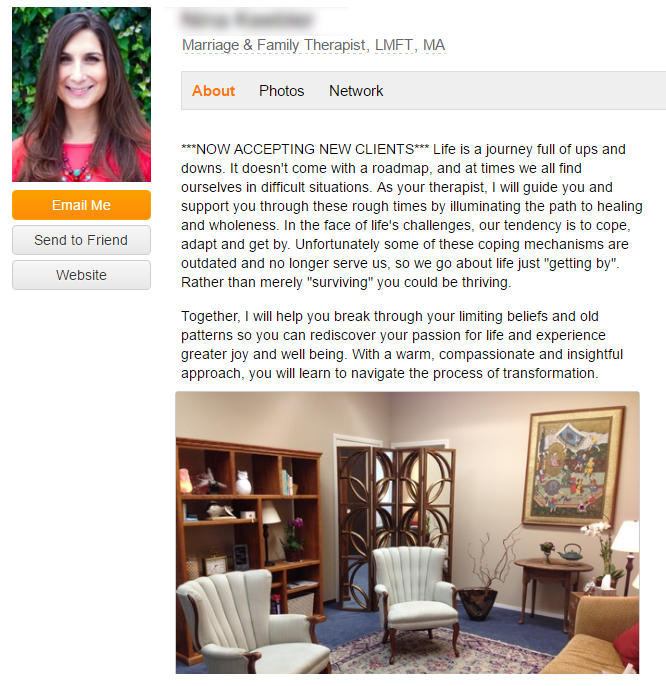
Does that seem like a minor improvement to you? It seems so small. Just four words.
But it’s the four words new clients want to hear.
Results:
Within 24 hours the therapist got an email from a prospect whose opening line in their email was, “I see you’re accepting new clients.” The therapist was thrilled.
That’s the power of good copywriting. And it’s the reason copywriting is an essential element of all online marketing, even for highly offline businesses, like this commercial real estate group below.
Accelerate the sales process
Here’s an example of how I powered a client’s offline sales process by revamping their website copy.
The Hallmark Real Estate group is a highly sophisticated asset management firm. They intend to get absolutely zero leads through their website. Yet they expect that most of their prospects will visit their website after having an initial in-person meeting. Their prospective clients want to learn more about Hallmark before investing any money in their services.
Their sales process looks something like this:
Make contact with prospect –>
Meet prospect for initial meeting –>
Prospect visits website –>
Prospect decides whether to meet for second meeting –>
Prospect decides whether to invest in firm’s services.
When a prospect visits Hallmark’s website, they’re smack in the middle of the sales process!
Engaging them with the right copy at that time will build their confidence in Hallmark and strengthen their desire to do business with them, accelerating the entire sales process that follows.
Part of Hallmark’s website shows case studies. Here’s what Hallmark’s original summary looked like for one of their case studies:

Dry, historical information.
All this does for the sales process is tell site visitors, “We’re real. We do asset management and have a case study to prove it.” Plus, that’s 278 characters of textual “real estate” gone to waste without generating any momentum towrads the sale.
Here’s how I revamped the copy for the summary of that same case study. Read the summary first, then take a look at the notes in red that explain my strategy for building interest.

Copy like this gives tremendous momentum for prospects to move forward in the sales process, even if it’s a strictly offline business. But remember, copy is going to be in every piece of your marketing — the ads, the landing pages, the downloadable content, and the email marketing. Copy is the engine behind your whole campaign.
Results:
Prospective clients will come to their follow-up meeting with The Hallmark Real Estate Group feeling impressed and far more prepared to invest in the outstanding results they saw on Hallmark’s website.